High-chrome blast wheels
2 or 4 blast wheels, each 7.5 kW–11 kW. Throws 120–220 kg/min of abrasive at 70 m/s for deep cleaning.
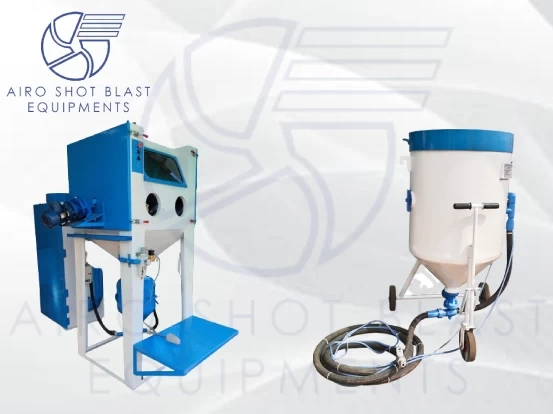
Shot Blasting Machine — Shot Blasting Machine Series · premium industrial finish.
Shot Blasting Machine Manufacturers in India often use the term shot blasting to define various processes such as Abrasive Blasting, Grit Blasting, Shot peening, and Media Blasting. A shot blasting machine removes a layer of deposits and impurities from the surface of metal and steel items using
Price varies by capacity & configuration. Send a quote request for an exact price.
| Product | Shot Blasting Machine |
|---|---|
| SKU | SBT-0301-SHOTBLAS |
| Category | Shot Blasting Machine |
| Price range | ₹ 40 K - 5 Lakh |
| Key specifications | |
| Abrasive Tank Capacity | 150 Kg – 1000 Kg |
| Material Type | Mild steel |
| Machine Type | Portable |
| Usage Surface | Finishing |
| Frequency | 50Hz |
| Grade | Semi-Automatic, Automatic |
| Additional information | |
| Type of Dust Collector | Fabric Bag |
| No of Turbines | 1-2 |
| Compressed air required at 80 psi | 30 - 217 cfm |
| Approx cleaning rate | 5 - 30 Sq. Mtrs./Hr |
| Grade | Manual |
| Std. blast hose length | 3 - 10 mtrs |
| Maximum pressure | 140 psi |
| Brand | Airo Shot Blast Equipments |
2 or 4 blast wheels, each 7.5 kW–11 kW. Throws 120–220 kg/min of abrasive at 70 m/s for deep cleaning.
Heavy rubber lining protects the barrel and parts from impact damage. Replaceable liner sections for long life.
Floor screw conveyor + bucket elevator returns shot to hopper. Separator removes dust and broken abrasive.
1-micron bag filter with auto pulse cleaning. Clean air returned to shop — no exhaust ducting required.
Siemens / Allen Bradley PLC with HMI touchscreen. Set cycle time, barrel speed, and blast intensity digitally.
Door interlocks, overload protection, emergency stop, and blast wheel protection for operator safety.
Talk to our machine expert for specs, delivery timeline, and best-fit configuration.
Share your requirement and our team will get back to you within 30 minutes.
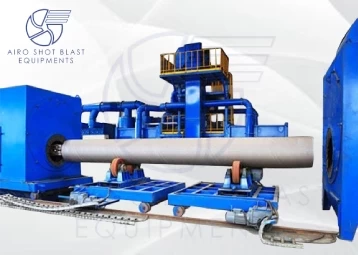 Shot Blasting Machine
In stock
Shot Blasting Machine
In stock
₹ 4,00,000
₹ 4,40,000
Free delivery · Delivered within 3–4 weeks · GST invoice included
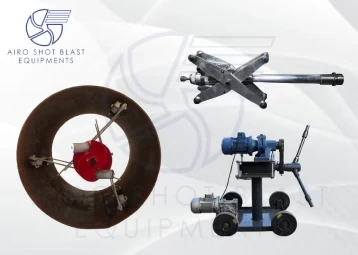 Shot Blasting Machine
In stock
Shot Blasting Machine
In stock
₹ 45,000
₹ 49,500
Free delivery · Delivered within 3–4 weeks · GST invoice included
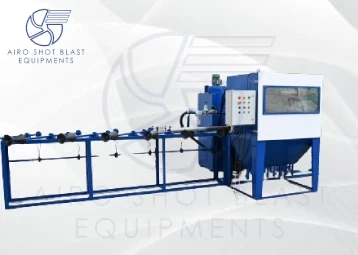 Shot Blasting Machine
In stock
Shot Blasting Machine
In stock
₹ 8,00,000
₹ 8,80,000
Free delivery · Delivered within 3–4 weeks · GST invoice included
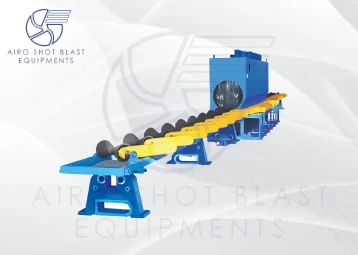 Shot Blasting Machine
In stock
Shot Blasting Machine
In stock
₹ 8,00,000
₹ 8,80,000
Free delivery · Delivered within 3–4 weeks · GST invoice included
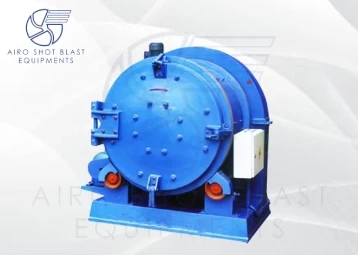 Shot Blasting Machine
In stock
Shot Blasting Machine
In stock
₹ 4,00,000
₹ 4,40,000
Free delivery · Delivered within 3–4 weeks · GST invoice included
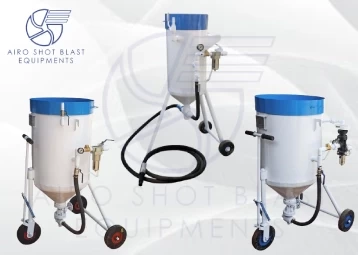 Shot Blasting Machine
In stock
Shot Blasting Machine
In stock
₹ 35,000
₹ 38,500
Free delivery · GST invoice included
Plant RFQ
Name, plant and machine type are enough. An engineer replies from the factory.