See detailed overview, process notes, and recommendations for this industry use-case. For matching spares or machine selection, request a quick quote.
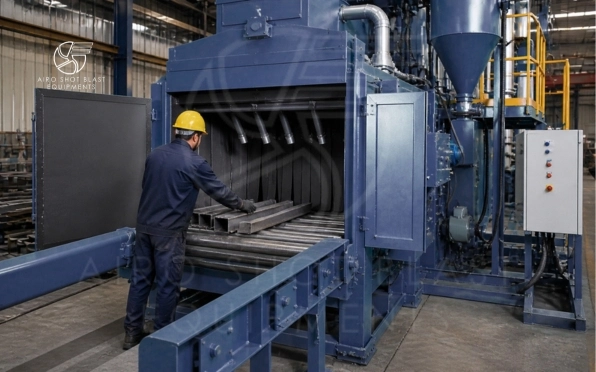
Shot blasting concrete is a surface preparation technique used in construction to clean, roughen, or profile concrete, steel, or other materials. It involves the use of high-speed steel shots (small spherical metallic beads) fired through a specialized shot blasting machine onto the surface to be treated. The impact of the shots removes dirt, rust, scale, or other surface contaminants and can also produce a textured surface, increasing the bond strength between the surface and the subsequent coating or overlay material. Shot blasting for construction is commonly used in flooring and concrete surface preparation, steel surface cleaning, and surface preparation for painting or coating application.
Probably at this point, you're asking why an abrasive blasting machine is used. Shot-blasting concrete floors are necessary for a variety of reasons. For instance, if you want to paint concrete or apply a new coat of epoxy or urethane, the surface must be clean and free of any chemicals, adhesives, and previous coatings. Concrete floors can be shot-blasted to ensure optimal adherence and prolong the lifespan of the coating. Blasting concrete is also excellent for giving concrete texture and creating "peaks and valleys." You increase the surface area and give the coating more to "grab" while it cures in addition to creating a fantastic look.
The two methods listed below are employed during shot-blasting during construction. The first method is referred to as wheel blasting. By rotating a turbine wheel, the wheel blasting method turns electric motor energy directly into kinetic abrasive energy. Each wheel has a capacity ranging from roughly 60 kg per minute to 1200 kg per minute. Wheel blasting machines are used when huge parts or large sections of surface need to be cleaned, desanded, descaled, deburred, de-rusted, or otherwise processed.
The second method is known as "air operated shot blasting machine," and it uses compressed air pressure to drive abrasive material. The abrasive blasting pot, dust collector, and abrasive recycling system all function together in the blasting chamber. To fully reclaim floors that transport the abrasive and clean the surface, one must either shovel or sweep the abrasive back into the blast pot.
Regardless of the technology employed, shot-blasting offers the following benefits:
Common production scenarios where shot blasting delivers the best finish, adhesion and throughput.
Pre-paint / Powder-coat prep
Remove mill scale and create a controlled profile for strong coating adhesion (Sa 2.5 / Sa 3).
Anti-corrosion surface cleaning
Uniform blast cleaning for steel plates, beams and fabricated structures before primer / epoxy.
Structural & fabrication lines
High-throughput processing on conveyor / roller lines with consistent finish and repeatable output.
Weld seam / scale removal
Clean weld areas, edges and heat-affected zones to improve coating quality and inspection readiness.
Deburring & edge rounding
Remove burrs and sharp edges on components for safer handling and better downstream fit-up.
Single-pass finish targets
Optimized media + wheel setup to achieve full cleaning in one pass with predictable surface profile.
A practical flow used on production lines to consistently hit Sa 2.5 / Sa 3 targets with the right profile.
Machines we quote for this job. Send size, material and finish — we will confirm the fit.
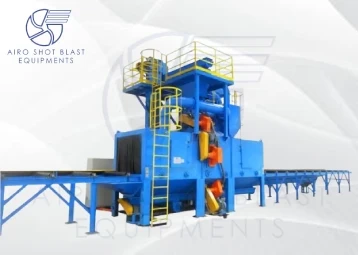
Roller conveyor shot blasting machine
| Product | Roller Conveyor Shot Blasting Machine |
|---|---|
| Machine Type | Roller Conveyor |
| Grade | Semi-Automatic |
| Pressure | 6-7 Bar |
| Number Of Doors | One |
| Power | 420 Volt |
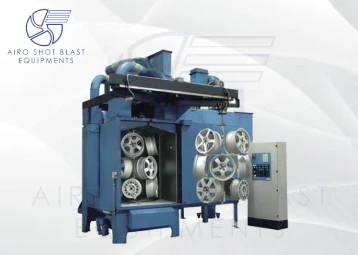
The wheel blasting machine is a powerful surface treatment equipment imp...
| Product | Wheel Blasting Machine |
|---|---|
| Material | MS Steel |
| Grade | Semi-automatic |
| Power | 3 HP |
| Capacity | 200 KG |
| Number of Door | Single Door |
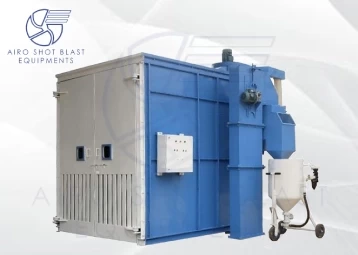
When compared to open-air blasting, the controlled environment of a shot...
| Material | Mild Steel |
|---|---|
| Motor Power | 10 Hp |
| Machine Type | Automatic, Manual |
| Cleaning rate | 3-5 sqr. mtr/ hr |
| Frequency | 50 Hz |
| Voltage | 415 V |
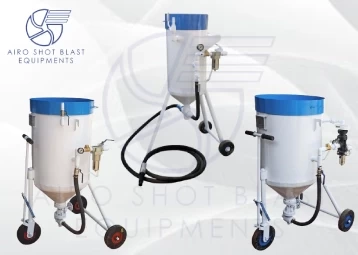
These portable shot blasting machines are hydraulically tested to 250 PS...
| Compressed air required at 80 psi | 60 - 217 cfm. |
|---|---|
| Storage tank capacity | 150 - 1000 kg |
| Grade | Manual |
| Approx cleaning rate | 4 - 21 Sq. Mtrs./Hr. |
| Std. blast hose length | 5 - 10 mtrs. |
| Types of dust collector | Fabric bag dust collector/ Reverse pulse jet pleated filter dust collector |

A grit blasting machine is a machine used to remove the rough surface of...
| Abrasive Tank Capacity | 150 - 1000 Kg |
|---|---|
| Material | Mild Steel |
| Machine Type | Portable, Cabinet |
| Usage | Surface Finishing |
| Grade | Manual, Semi-Automatic, Automatic |
Typical ranges for roller conveyor blasting lines. Final specs depend on job size, wheel count and finish target.
| Parameter | Typical value / range |
|---|---|
| Cleanliness standard | Sa 2.5 (standard) / Sa 3 (on request) |
| Throughput | 500–3000 kg/hr (depends on section size, rust grade & line speed) |
| Surface profile | Rz 40–70 µm (achieved by shot/grit mix and wheel parameters) |
| Blast wheels | 4–8 units (coverage on all 4 sides, depending on chamber design) |
| Throwing speed | 70–80 m/s (wheel dependent) |
| Abrasive recovery | Floor screw conveyor → elevator → separator → recirculation to wheels |
| Dust collection | Pulse-jet dust collector (fine dust capture; clean air return) |
| Primer window | Ideally within 4 hours after blasting (site conditions may vary) |
Plant RFQ
Name, plant and machine type are enough. An engineer replies from the factory.