See detailed overview, process notes, and recommendations for this industry use-case. For matching spares or machine selection, request a quick quote.
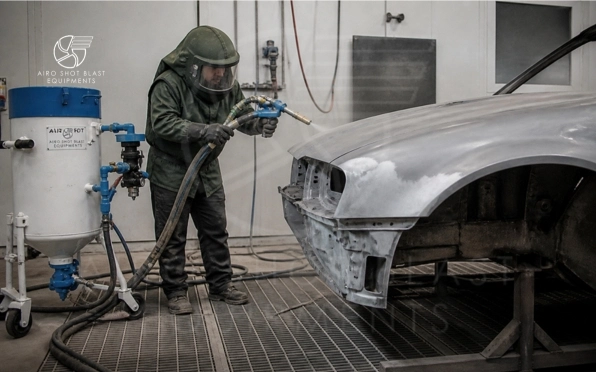
Shot blasting for automotive is a process commonly used in the automotive industry to clean, prepare, and finish metal surfaces. In this process, small metallic or abrasive particles are projected at high speed onto a metal surface using a shot blasting machine. The high-velocity impact of the shot removes surface contaminants, rust, and scale, and also helps to create a uniform surface texture. This can improve the adhesion of coatings and increase the overall durability of the metal component.
In the automobile industry, shot blasting machines are mostly used for anti-rust treatment, relieving steel plate stress, identifying faults in workpieces before they become problems, and removing welding slag.
It is crucial to shot blast the steel plate that makes up the car body. Comparing shot-blasted steel plate to regular steel plate, the anti-rust coating grade is significantly better.
The shot blasting machine for car wheels is a shot blasting tool for aluminum alloy wheels. In order to achieve a consistent metallic sheen and increase the quality and anti-corrosion effect of the steel, it can apply strong shot blasting to the workpiece's original state surface to remove rust, welding slag, and oxide scale. The shot blasting room, indoor conveying roller, inlet, and outlet conveyor roller, blasting machine, abrasive circulation system (including hoister, separator, vertical and horizontal screw conveyor, and pipes for transferring abrasives), dust removal, and electrical control components are the machine's primary functional components. This machine operates on a high-function continuous cleaning system for nonstop feeding. The whole body receives striking and friction of intense abrasives (steel shot) from four different coordinates when the steel structure products or steel are sent into the abrasive area of the cleaning machine room during the cleaning process. This causes the rust layer and the dirt on it to quickly fall off, and the steel obtains a bright surface with a certain roughness.
Through the screw-conveyor, the abrasives and rust dust that are in contact with the steel are moved to the abrasive circulation system. The outdoor cleaning roller's two sides are used to load and unload the workpiece. The funnel is used to funnel the dust and abrasive mixture into the lower portion of the hoister, where it is collected by vertical and horizontal screw conveyors before being lifted into the separator in the upper portion of the machine. Pure abrasives that have been separated fall into the separator hopper. The exhaust pipe transports granular dust to the dust treatment system, which then collects particle dust while discharging clean gas.
Shot blasting is commonly used in the automotive industry for a variety of applications, including:
Surface preparation: Shot blasting is used to clean and prepare metal surfaces prior to painting or thermal spray gun coating. This improves the adhesion and durability of the coating.
Component cleaning: Shot blasting is used to clean automotive components, such as engine blocks and transmission parts, prior to assembly.
Surface finishing: Shot blasting is used to create a uniform surface finish on metal components, improving the appearance and reducing the need for additional polishing or finishing steps.
Surface hardening: Shot blasting can be used to increase the hardness of metal surfaces, improving resistance to wear and corrosion.
Shot blasting is an efficient and cost-effective way to improve the quality and durability of metal components in the automotive industry. It can be performed on a variety of metal components, including steel, aluminum, and cast iron.
Common production scenarios where shot blasting delivers the best finish, adhesion and throughput.
Pre-paint / Powder-coat prep
Remove mill scale and create a controlled profile for strong coating adhesion (Sa 2.5 / Sa 3).
Anti-corrosion surface cleaning
Uniform blast cleaning for steel plates, beams and fabricated structures before primer / epoxy.
Structural & fabrication lines
High-throughput processing on conveyor / roller lines with consistent finish and repeatable output.
Weld seam / scale removal
Clean weld areas, edges and heat-affected zones to improve coating quality and inspection readiness.
Deburring & edge rounding
Remove burrs and sharp edges on components for safer handling and better downstream fit-up.
Single-pass finish targets
Optimized media + wheel setup to achieve full cleaning in one pass with predictable surface profile.
A practical flow used on production lines to consistently hit Sa 2.5 / Sa 3 targets with the right profile.
Machines we quote for this job. Send size, material and finish — we will confirm the fit.
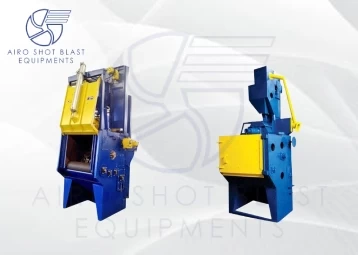
Our Tumblast Shot Blasting Machine is ideal for batch cleaning small com...
| Machine Type | Tumblast Shot Blasting |
|---|---|
| Grade | Automatic, Semi-Automatic |
| No of Blasting Gun | 2 - 4 Nos. |
| Blasting Gun Dia. | 6 mm |
| Blasting Hose | 19 mm |
| Load Capacity | 150 - 400 Kg (Volumetric Consideration) |
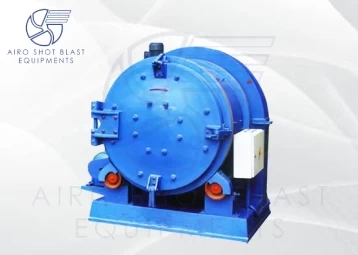
Rotary Barrel Shot Blasting Machine is optimum shot blasting for small,...
| Machine Type | Wheel Blasting |
|---|---|
| Material | Mild Steel |
| Abrasive Feed | Barrel Type |
| Barrel Capacity | 100 - 150 Kg |
| Barrel RPM | 5 - 6 |
| Dust Collector | Fabric Bag / Pleated Filter |
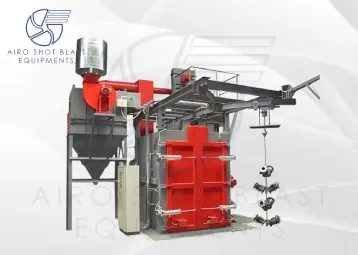
Airless hanger shot blasting machine type with a variable number of blas...
| Product | Hanger Shot Blasting Machine |
|---|---|
| Machine Type | Hanger Type |
| Automatic Grade | Automatic, Semi-Automatic |
| Number Of Doors | Double Door |
| Blast Wheel Size | 15 ½ x 2 ½ inch |
| Blast Wheel No. | 2 Nos. |
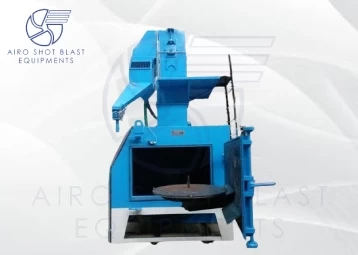
Table Type Shot Blasting Machine
| Dia of swing table | 750 mm - 1200 mm |
|---|---|
| Shot Velocity | 70-89 Mtrs./Sec. |
| Shots Consumption | Approx. 1.875 Kgs/Hr./Wheel |
| H.P. of Blast Wheel | 7.5 - 15Hp |
| R.P.M. of Blast Wheel | 2800 - 2400 |
| Shot Velocity | 70-89 Mtrs./Sec |
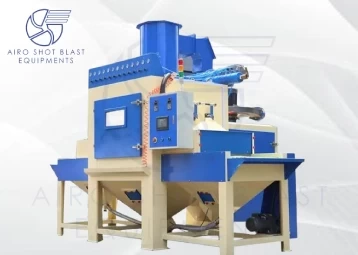
The automatic shot blasting process is carried out in a closed circuit....
| Machine Type | Cabinet |
|---|---|
| Cabinet Type | Pressure / Suction / Wet Blasting Cabinet |
| Grade | Automatic / Semi Automatic |
| Material | Mild Steel |
| Nozzle | Tungsten / Boron Carbide |
| Dust Collector | Fabric Bag / Pleated Filter Bag |
Typical ranges for roller conveyor blasting lines. Final specs depend on job size, wheel count and finish target.
| Parameter | Typical value / range |
|---|---|
| Cleanliness standard | Sa 2.5 (standard) / Sa 3 (on request) |
| Throughput | 500–3000 kg/hr (depends on section size, rust grade & line speed) |
| Surface profile | Rz 40–70 µm (achieved by shot/grit mix and wheel parameters) |
| Blast wheels | 4–8 units (coverage on all 4 sides, depending on chamber design) |
| Throwing speed | 70–80 m/s (wheel dependent) |
| Abrasive recovery | Floor screw conveyor → elevator → separator → recirculation to wheels |
| Dust collection | Pulse-jet dust collector (fine dust capture; clean air return) |
| Primer window | Ideally within 4 hours after blasting (site conditions may vary) |
Plant RFQ
Name, plant and machine type are enough. An engineer replies from the factory.